
In 1968, a few joints I gave away left me facing the possibility of decades in prison. More than half a century later, I walked into a legal dispensary and paid for cannabis at the counter.
My attorney peered at me from behind his imposing oak desk that night in January 1968 and told me what I faced: one felony charge that carried a maximum sentence of 10 years in prison and four that could each earn me another 15 years behind bars.
I didn’t know much about the law, but I knew enough math to be terrified. Four times 15 equals 60, plus 10 is 70. I was 19 at the time, so I figured I might get out of prison at age 89.
An Unexpected Visit
Stretched out on my bed in my mother’s house one night about five months earlier, I was pondering options for my first semester at Suffolk County Community College on Long Island, New York, that fall. Should I take the courses that sounded like fun or the ones that my guidance counselor advised would be most helpful in getting me accepted into a four-year school? I was still vacillating when the phone rang.
When I picked up the receiver and said hello, I heard, “Hey, Jeff, it’s Noel!”
I recognized the name and voice of one of the most high-profile kids in my high school class.
“Sorry I’ve kind of been out of touch,” he said. “A lot going on.”
“Been out of touch”? I thought. We’d never really been in touch. We’d had a few quick conversations, and he’d written a couple of witty lines in my yearbook before graduation, but we weren’t friends and had never even seen each other outside of school.
“I’m in the neighborhood with a couple of guys,” Noel said, “and I thought maybe we could stop by and hang out.”
“Sure,” I said. Though surprised to hear from him, I was flattered by the attention of such a popular kid. Besides, I was getting tired of looking through the college course catalog.
Minutes later, Noel showed up at the front door, his friends in tow. He was wearing his standard granny glasses, blue jeans, and Army jacket. As usual, he looked as if he hadn’t shaved in a few days. His companions, whom he introduced as Billy and Larry, wore jeans and T-shirts and, like me, had shoulder-length hair. Larry had a string of beads around his neck, and Billy had a mustache and beard. They appeared to be a few years older than Noel, in their mid-20s, maybe. They smiled at my mother as they passed her on the way to my bedroom.
I asked how they knew one another, and they said they used to work together in an electronics store. Then I asked whether they’d like to hear some music. I put on Pink Floyd’s debut album, The Piper at the Gates of Dawn, which had only been out for a couple of weeks.
“Wanna get high?” asked Noel. “I’ve got some out-of-sight grass.” He stuck a hand in his pocket but came up empty. “Uh-oh, I guess I left it at home. You got anything, man?”
In fact, I’d tried marijuana for the first time only a few weeks earlier, and a friend had given me a small baggie.
“I do,” I said.
I pulled it out from a hidden corner in a drawer of my desk, closed and locked my door, and lit incense to mask the smell. Noel produced rolling papers and proceeded to make a joint, which we passed around.
Less than an hour later, when the album had ended and we all had a nice buzz, Billy looked at his watch and then at Noel.
“Hey, man, we’d better get going.” Then he turned his eyes to me. “But that was some good weed. Got any you could sell me?”
“I don’t,” I said. “Sorry.”
Billy smiled, and they said goodbye and left.
“Who are they?” asked my mother a few minutes later.
“The guy with the Army jacket is Noel,” I explained. “I went to high school with him. The other two are friends of his.”
“There’s something I don’t like about them,” she said. “I can’t put my finger on it.”

Stopping By the Campus

About a week later, on August 20, I drove over to the campus of the State University of New York at Stony Brook, where I often went to hang out and where I would later attend concerts by artists such as the Jimi Hendrix Experience and the Doors. The university’s archives document the campus’s remarkable concert history during those years.
The Stony Brook campus had opened only five years earlier, in September 1962, with 780 students and was rapidly expanding. It was attracting thousands of long-haired students. Some formed a campus chapter of the left-wing Students for a Democratic Society, burned draft cards, or picketed the draft board office in nearby Smithtown. Others passed out leaflets about the Vietnam War at local supermarkets.
The town’s residents weren’t happy about any of this. Until the school opened, Stony Brook had had a Norman Rockwell ambiance, with an anachronistic downtown, two museums, and half a dozen historical sites.
“This was a bigoted, conservative community,” university professor Paul A. Newlin told me for an article I wrote in 1975. “And before the school came here, let’s face it, this was really an idyllic place for the people who had something, who were upper middle class. The university changed all that. You could see the proliferation of shopping centers and that kind of thing. And people saw the university bringing more people into the area that they didn’t want. A lot of them thought the university was responsible for ruining the life they had back in 1955.”
“Many people didn’t want the school here in the first place, and then it started expanding all over,” another area resident told me. “The weird-looking people began going into the shops. I don’t think many people enjoyed that. There was a stigma against college students.”
Newspapers attacked the school for its alleged moral degradation, as did letter writers, one of whom wrote to the Long Island daily Newsday to speak up for “the rights of the student who was not accepted at the state university. He’s over in Vietnam now, and some pot smoker is taking his place.”
At the college on August 20, I took a seat on a couch in the student union and started reading In God We Trust, All Others Pay Cash, a book by humorist Jean Shepherd. I was a few pages into it when I looked up and saw Noel, Larry, and a guy I didn’t know standing before me.
“Fancy meeting you here!” said Noel as they sat down.
We made small talk, and then Larry’s friend, Joey, asked whether I had any grass I could sell.
“Sorry,” I said. “I’m not selling, and I don’t have much, anyway.”
“Just a little?” Joey pleaded. “I’m really low, man.”
I smiled and gave him a couple of joints.
“No charge,” I said. “Have fun.”
I ran into Noel and his friends on four other occasions between then and late October, three times at Stony Brook and once at a fast-food joint called Space Burger. Each time they asked whether I could sell them any grass, and each time, I offered to give them a bit. A couple of times, when they insisted on paying, I accepted a few dollars.
5 A.M. Knock at the Door
I didn’t see them after October, and the holidays came and went. By then, I had smoked grass maybe a dozen times, but I was now mostly preoccupied with adjusting to college and doing my homework.
Then, on the morning of Jan. 17, 1968, when I was on winter break, a loud banging on our front door woke me at 5 a.m.
“Police!” a man shouted. “Open up!”
As I headed for the door in my pajamas, my heart beating fast, my mother came up behind me and said, “Don’t open it! It could be robbers pretending to be police.”
But she peered through a curtain, saw two radio cars and several uniformed cops with guns drawn, and unlocked the door.
“We have a warrant for the arrest of Jeffrey Burger and another warrant to search the residence,” announced one of the men as they poured into the house.
My mother, in a state of shock, offered them coffee, but they waved her away. Several cops ransacked my bedroom while others moved on to search the bedrooms of my 14-year-old brother and 11-year-old sister.
In my brother’s room, a detective pulled drawers from a dresser until he came upon approximately 60 metal Band-Aid boxes, at which point he yelled out to his colleagues, “I found it! I found it!” apparently thinking he’d discovered a drug stash.
The first box he opened contained wooden railway ties for my brother’s model train layout. The second had tiny railroad spikes to fasten the track to a table. Another had a couple of dozen “grain-of-wheat” light bulbs to use in tiny streetlights or inside buildings on the large model train layout behind the detective. After opening most of the Band-Aid boxes and finding nothing but toy train parts, the detective gave up. He came downstairs, told my mother the police were impounding my car as evidence, demanded a key, and drove it away. Then one of his companions said he’d give me five minutes to get dressed.
After I threw on some clothes, the cops cuffed my hands behind my back, led me outside, and drove me to a police station in nearby Hauppauge for booking. On the way, one of them laughed and said, “Time for a haircut.” Another said, “You’re some big dope dealer, aren’t you?”
In Hauppauge, to my astonishment, I saw several of my high school friends, plus people I knew from Stony Brook University and Suffolk County Community College. As I later learned, there were about three dozen of us. Stony Brook University’s archives put the number at 35, of whom 24 were students at the school. All were first offenders aged 16 to 22, and most were charged solely with the sale of marijuana or simply possession.
The majority were Stony Brook students; others, like me, were what a police spokesman called “transients.” In its 1968 coverage of the raid, Newsday quoted the spokesman directly: “They’re like parasites who live with students and hang out on campus to use dope and have fun and games with the girls.”
Virtually all of us had been nabbed with the assistance of Noel, who we later learned had himself been arrested many months earlier and threatened with extensive jail time if he didn’t help undercover agents make drug buys from his classmates and friends.
Two Hundred Cops, With Reporters in Tow

His cooperation had led to what contemporary coverage described as the nation’s largest campus crackdown on drug users up to that point. It had been carried out by 198 police officers, according to the university’s own timeline, who had attended a 3 a.m. briefing and worked from a 107-page plan book that included dossiers on each suspect with descriptions such as “he wears an American flag as a cape” and “he is a member of the SDS [Students for a Democratic Society].” A 47-page appendix contained maps and floor plans of the homes and dorms where the suspects lived. At the invitation of the police, reporters had attended the predawn briefing and accompanied officers on the raid.
Newsday‘s big front-page story, “Drug Raid Hits State U Dorms,” reported that federal and state agencies had participated in the action and that “undercover agents posing as hippies were able to buy dope at the school on their first day there.” Headlines of sidebars included “DA Plans Grand Jury Probe of Stony Brook” and “Raid Climaxed 4-Mo. Probe” but also “A Third Have Tried Pot: Dean” and “Students Say Why Not?” A New York Times article, “Students Decry Stony Brook Raid,” quoted one undergraduate as saying, “I think someday we’ll look back on this raid like our parents looked back on police raids of the Prohibition Era.”
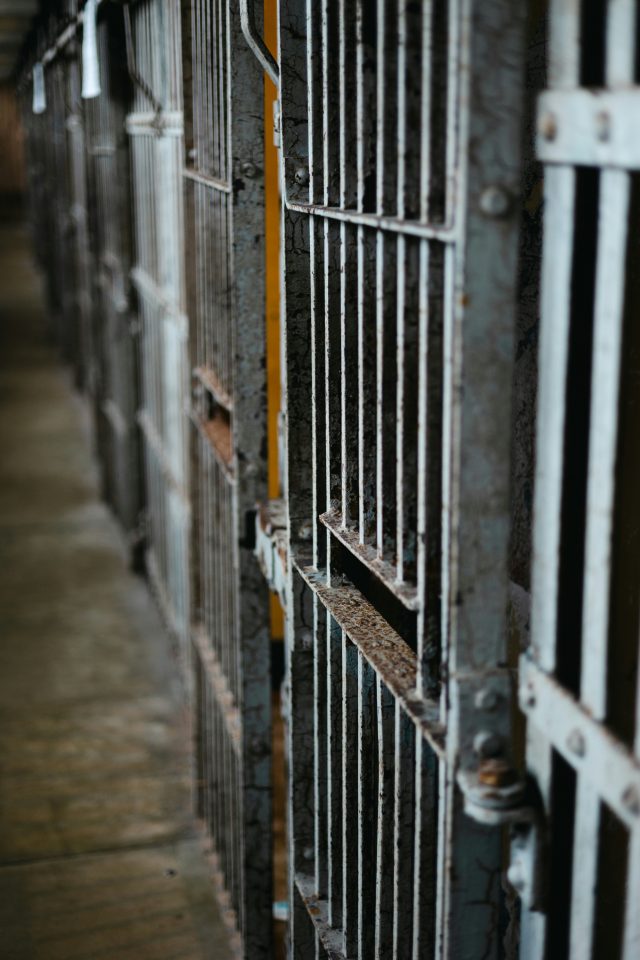
While newspaper subscribers were digesting all these articles, I and several dozen other young people were being booked and fingerprinted in Hauppauge. Then we were ushered onto a police bus for the 45-minute drive east to Riverhead, the county seat, where we were jailed, about a dozen to a cell. Sleep-deprived and rattled, I sat in one of those cells for about four hours. Finally, a guard called my name and led me to a courtroom, where he told me to sit and wait for my name to be called for my arraignment.
I did as I was told and listened as the judge set bail for a man who’d been arrested for shooting a gun at his neighbors. Then I heard, “The State of New York versus Jeffrey Burger.”
A second later, a man seated behind me called out: “Stuart Namm, your honor, representing Mr. Burger.” I turned and saw my mother sitting beside him. She’d made some quick early-morning phone calls to request the attorney’s appearance. She had paid him a $1,500 fee and he arranged for my release on $2,000 bail, which she paid via a bail bondsman by using her house as collateral.
Facing Decades in Prison
I left the courthouse and met with Namm that same evening, which is when he explained that giving marijuana away was legally equivalent to selling it and said I faced up to 70 years in prison.
A few days later, I was summoned to the office of the dean at Suffolk County Community College. He told me that townspeople were up in arms about the drug use exposed by the raid and that it was not in his school’s best interest to be associated with the arrests. Consequently, he said, I could attend classes in the spring only during the evening, when my attendance would be less noticeable, or I could take a leave of absence. I opted for the leave.
Some weeks later, my mother got a call from Namm. He’d negotiated an agreement for the felony charges against me to be dropped in exchange for guilty pleas to misdemeanors for being a “youthful offender” on five dates. (This was possible because I was under 19 at the time of the crimes with which I was being charged.) I went to court shortly thereafter, said “guilty” five times, and received a sentence of three years of probation.
I considered myself lucky, not only because probation sounded much better than the prison term that I’d originally faced but because a few of the arrestees did do time. At least one didn’t even get out before trial because his parents refused to supply bail money.
A probation officer visited me monthly for a while, then confided to me that he was leaving the department to join a commune out west. In the fall, meanwhile, I was allowed back into daytime classes at Suffolk County Community College and, after finishing there, I transferred to the State University of New York at Albany, where I was assigned a new probation officer.
He met with me once, after which I was asked to complete and mail in a monthly questionnaire to attest to my good behavior. It included queries such as “Are you avoiding habits, places, or people which led you into difficulty?” and “Where do you spend your evenings?”
Then, on Nov. 13, 1970, I received a notice that read, “Effective this date…your probation is hereby terminated. Very truly yours, William H. Stalker, Chief Probation Officer.”
Half a Century Later
Flash forward more than half a century to 2023. Cannabis legalization was spreading nationwide, and the legal adult-use market in New Jersey, where I now live, was still relatively new.
At a dinner party at the house I share with my wife, I mentioned to a friend that I sometimes had trouble staying asleep through the night. She said she’d had the same problem and told me that she used cannabis gummies. She suggested trying a 5-milligram gummy marketed as indica and said she typically took half of one at bedtime.
I hadn’t used cannabis for many decades, but I decided to give her suggestion a try. After Googling “marijuana retailer near me,” I found two multistate chains with local stores, Ascend and RISE, and drove to the former. As I entered the parking lot, an attendant approached my vehicle. When I rolled down the window, he asked, “Medical or recreational?”
I said the latter because I didn’t have a medical marijuana ID, and he directed me to the parking area for recreational users. Inside the building’s lobby, I showed my driver’s license to prove I was over 21. I was in my 70s by then. Then I entered the retail facility, a large room with high ceilings.
It looked and felt a lot like an Apple Store. Rock music played, and big video screens displayed messages about ending marijuana prohibitions in states that still had laws on the books. Plexiglass cabinets held attractively displayed assortments of cannabis products, everything from packages of loose marijuana and rolled joints to gummies and paraphernalia. A row of touchscreens offered a convenient way to place orders.
A staffer guided me through the touchscreen process as I selected a package of pomegranate-flavored gummies. Then he pointed me to the checkout line, where several dozen people of all ages, none of whom looked remotely like the hippies of yore, waited to pick up their purchases.
When my turn came, a cashier handed me my candies in an attractive metal tin that had a sticker listing ingredients and a “best by” date. She placed the tin in a bag emblazoned with Ascend’s logo and told me the price was $32.16, including state and local cannabis tax.
“Will that be cash or debit?” she asked.
I smiled at the cashier.
More than half a century earlier, a few joints had put me in handcuffs. My mother had put her house up as collateral for my bail. I had been pushed out of daytime college classes and left wondering whether I might spend decades behind bars.
Now marijuana was a regulated product I could purchase over a counter. The behavior that had once brought police to my mother’s front door at 5 a.m. had not somehow become more innocent with the passage of time. What changed was the machinery surrounding it.
In 1968, there were undercover agents, warrants, nearly 200 police officers, jail cells, felony charges, bail, and probation. In 2023, there were touchscreens, taxes, product labels, a checkout line, and a cashier asking how I wanted to pay.
I felt vindicated by the changed laws, and I wished my mother had lived to see this day.
But the transformation remains incomplete. Laws still vary widely from one jurisdiction to another, and the arrests never stopped. State and local police recorded 200,960 arrests for marijuana possession in 2025 alone, roughly one every three minutes, in a country where legal cannabis stores now operate openly in half the states.
As I walked out of the dispensary with my gummies, I thought about how much suffering decades of marijuana prohibition had caused, and how strange it was that an act once treated as evidence of serious criminality could now be processed like any other retail purchase.
Imagine how much trouble could have been avoided if marijuana buyers over the past half century had been confronted with “Cash or debit?” rather than “Police! Open up!”